Before you continue

To give you the best possible experience please select your preference.

Enreach
homepage.jpg

Why AI conversational analysis is a game-changer for outreach

Back to overview 10.11.2025 | Topic: Outbound Sales Software

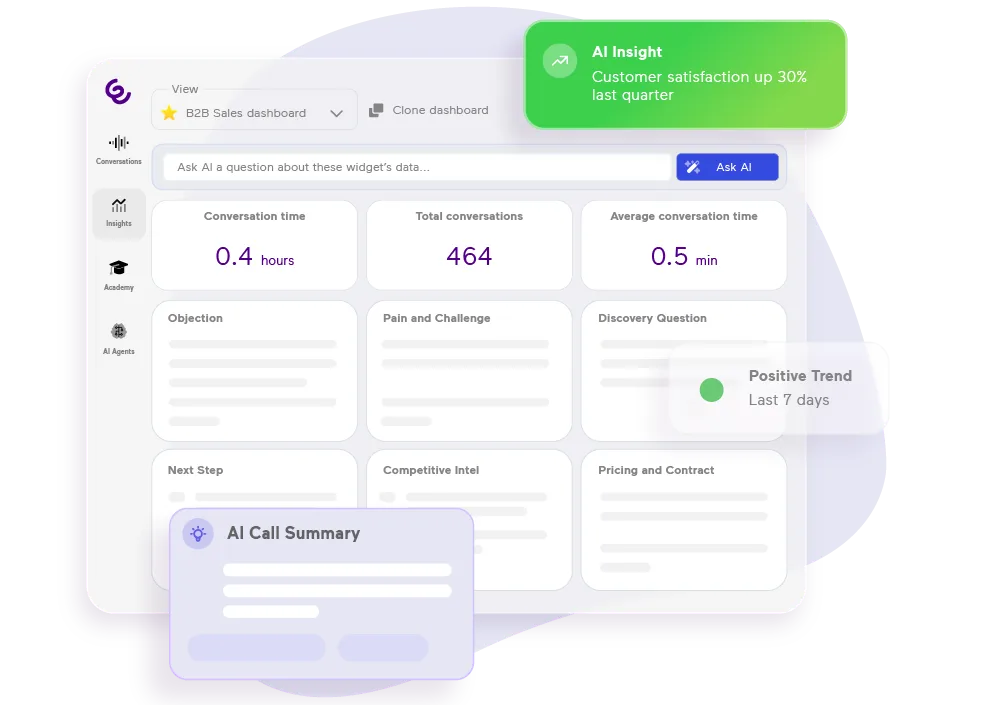
Conversational analysis uses artificial intelligence and machine learning to analyse spoken and written human interactions at scale.

It processes unstructured data, such as call recordings, chat logs and email threads, transcribes it and then analyses it to identify patterns and trends, and extract meaningful insights.

Rather than reviewing conversations manually, teams get an automated, data-driven view of customer behaviour and preferences.

Key use cases for conversational analysis

Conversational analysis delivers value across multiple business functions. Some of the most impactful use cases include quality assurance, agent coaching, and sales and marketing intelligence.

1. Agent quality assurance

Quality assurance processes have traditionally relied on managers manually reviewing a small sample of calls and scoring agents against predefined criteria. This approach is time-consuming and often inconsistent.

AI enables organisations to monitor every conversation for:

  • Compliance with scripts and policies
  • Tone and professionalism
  • Resolution effectiveness
  • Escalation risks
  • Customer dissatisfaction signals

Helping organisations improve adherence to processes and procedures and align with statutory regulations.

Benefits:

  • Improved, consistent customer experience
  • Reduce customer complaints
  • Faster issue detection
  • Higher satisfaction scores

2. Agent coaching and performance development

Agent coaching is most effective when it is based on real evidence (not subjective opinions) and it is part of a continuous learning and feedback process.

Conversational analysis highlights behaviour that leads to success, missed opportunities, and areas for improvement. Managers can then use this insight to coach their agents based on real experiences and not assumptions.

More advanced tools can even provide automated, real-time feedback directly to agents, enabling continuous self-learning and faster skill development.

Benefits:

  • Faster onboarding
  • Improved communication skills
  • Higher confidence
  • Better conversion rates

Skilled agents are more effective in their outreach and will consequently deliver better conversion rates.

3. Sales and marketing insights

Customer conversations are one of the richest sources of market intelligence for sales and marketing teams. They reveal what prospects care about, what blocks decisions, and how they evaluate solutions.

AI aggregates all of this information into insights. Marketing teams can use them to refine campaigns and messaging. Sales teams can use them to personalise outreach and prioritise high-intent prospects.

Benefits:

  • More relevant campaigns
  • Higher response rates
  • Better lead qualification
  • Shorter sales cycles

Instead of relying on static personas and profiles, teams can base outreach on real, current customer insights.


Benefits of conversational analysis

Across all use cases, conversational analysis delivers several core advantages.

Greater call centre efficiency

Automated conversation analysis replaces hours spent on manual reviews and reporting.

This frees-up managers to focus on higher-value activities, such as performance management and strategic planning.

Self-learning features also make it easier to train agents, so their productivity and skills improve much quicker than waiting for one-to-one sessions.

Improved customer engagement

Conversational analysis helps build more confident, skilled, and informed frontline teams.

With better coaching, agents can communicate more effectively and respond better to customer needs.

This leads to a more consistent customer experience across all touchpoints.

Deeper customer understanding

By analysing conversations at scale, teams can uncover patterns that were previously invisible, helping them understand what truly drives customer behaviour.

Insights also enables messages and offers to be tailored to specific roles, industries, and buying stage, increasing engagement and trust.

Better decision making that drives performance

Access to real conversation data improves decision-making at every level of the organisation.

Sales and service teams know which approaches work best. Managers understand where processes break down. Leaders gain insight into market trends and customer sentiment.

These data-driven decisions lead to more productive conversations and higher conversion rates across sales, renewals, and retention.

Conversational analysis is transforming outreach

Conversational analysis is transforming outreach from a manual, intuition-led process into a data-driven strategy.

By analysing real interactions at scale, teams can improve quality, coach more effectively, personalise outreach, and adapt to changing market conditions.

When implemented responsibly and strategically, conversation insights turn everyday interactions into a powerful competitive advantage.